When people ask me why I chose to dedicate my life to Traditional Chinese Medicine, I often smile and say, “Because it worked for me when nothing else did.” But the truth is deeper: TCM didn’t just treat my symptoms, it reshaped the way I see health, the way I treat others, and even the way I live my daily life.
Traditional Chinese Medicine isn’t a single therapy, but a vast and interconnected system. It’s a living philosophy that has been evolving for over 2,000 years — one that weaves together herbs, therapies, movement, nutrition, and mindfulness into a complete approach to wellness.
In this blog, I want to share the treatments and herbal remedies I personally trust — not from theory alone, but from lived experience as both a patient and a practitioner here in Ottawa. This is not a quick “TCM cheat sheet.” It’s a journey through the therapies that have healed me, supported my patients, and reminded me time and time again that the body truly knows how to find its way back to balance.
My First Encounter with TCM Therapies
When I first walked into a Chinese Medicine clinic years ago, I thought acupuncture was the only therapy I’d find. Little did I know that what awaited me was an entire world of healing techniques — therapies that felt ancient yet surprisingly intuitive.
I still remember the moment I smelled mugwort for the first time during a moxibustion treatment, or the gentle warmth of cupping marks on my back, or the soothing relief of herbs brewed into tea that seemed to nourish me from within. These weren’t just treatments; they were rituals of care that helped me slow down, reconnect, and trust the process of healing.
Now, as I practice in Downtown Ottawa and welcome patients from Centretown, Westboro, the Glebe, and even Gatineau, I see that same wonder in their eyes when they first experience these therapies.
Acupuncture: The Foundation of TCM
If TCM were a tree, acupuncture would be its roots — grounding and essential.
-
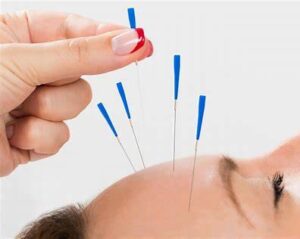
What it is: Acupuncture uses ultra-fine needles placed at specific meridian points to restore the flow of Qi (energy) and balance Yin and Yang within the body.
-
My experience: The first few sessions lifted a fog I didn’t even realize I was living under. Suddenly I was sleeping, breathing, and digesting with ease again.
-
How I use it now: For patients struggling with stress, anxiety, fertility challenges, pain, or insomnia, acupuncture often becomes the cornerstone of their healing journey.
Acupuncture isn’t about “stabbing pain away” — it’s about gently nudging the body back into alignment. Most of my Ottawa patients leave the table feeling lighter, calmer, and more centered, as though someone turned the dimmer switch down on all the chaos in their life.
Chinese Herbal Medicine: Nature’s Pharmacy
After acupuncture, herbal medicine became the next chapter in my healing.
-
What it is: TCM herbs are carefully combined into formulas that address the root causes of imbalance. They’re not one-size-fits-all, but personalized blends that can be brewed as teas, taken as powders, or even in capsules.
-
Why I trust them: Herbs like Dang Gui (Angelica) for blood nourishment, Huang Qi (Astragalus) for immunity, and Gan Cao (Licorice) for harmonizing formulas have been used for centuries — and I’ve seen their effects firsthand.
-
My story: When I was struggling with fatigue and stress, an herbal formula worked alongside acupuncture to restore my energy. It wasn’t an overnight miracle — it was steady, subtle, and deeply nourishing.
Herbal medicine is like having the wisdom of the earth itself distilled into daily doses of care.
Cupping Therapy: Release and Relief
You might have seen athletes with round marks on their backs — that’s cupping.
-
What it is: Glass or silicone cups create suction on the skin, increasing circulation, relieving muscle tension, and encouraging detoxification.
-
My experience: The first time I tried cupping, I expected discomfort. Instead, I felt relief as if a weight had been lifted off my shoulders. The deep ache I carried dissolved into a sense of openness.
-
For patients: In Ottawa, I often use cupping for professionals who sit at desks all day or athletes recovering from training. It’s one of the most immediate, tangible therapies in TCM.
Those purple marks? They’re not bruises — they’re signs of stagnation being released.
Moxibustion: Healing with Warmth
If acupuncture is about precision, moxibustion is about warmth.
-
What it is: Moxibustion uses dried mugwort (Ai Ye) burned near acupuncture points to warm the body, move Qi, and strengthen Yang energy.
-
Why it matters: This therapy is especially powerful for fatigue, cold conditions, and digestive issues.
-
Personal note: During my own treatments, the smell of mugwort became oddly comforting — like a reminder that healing could be gentle, warm, and nourishing.
Many of my patients in Centretown and Westboro love moxibustion during Ottawa’s cold winters. It’s like a healing fire for the body.
Gua Sha: The Gentle Scraping That Surprised Me
-
What it is: Gua sha involves gently scraping the skin with a smooth tool (traditionally jade or stone) to improve circulation, release toxins, and ease tension.
-
Personal story: I tried gua sha during a period of constant neck stiffness. The redness it left behind looked dramatic, but the relief was instant — my neck felt freer than it had in months.
-
Modern uses: These days, gua sha is also used for facial rejuvenation, helping with circulation and skin glow. Patients in Ottawa often ask me about “gua sha facials,” and they’re amazed at how relaxing it can be.
Tui Na: The Massage That Goes Deeper
Western massage is wonderful for relaxation, but Tui Na — a traditional Chinese massage — works differently.
-
What it is: Tui Na uses kneading, pressing, rolling, and stretching to stimulate meridians and balance energy flow.
-
Why I value it: It’s both therapeutic and relaxing, making it ideal for patients with musculoskeletal pain, stress, or even digestive complaints.
-
My memory: After my first Tui Na session, I felt taller, lighter, and as though someone had reset my entire body.
Diet Therapy: Food as Medicine
In TCM, food isn’t just fuel — it’s medicine.
-
Principle: Each food carries energetic properties (warming, cooling, moistening, drying) that can either balance or disrupt your body.
-
Example: During Ottawa’s cold winters, I encourage patients to eat warming foods like ginger, cinnamon, and soups, while avoiding excessive cold or raw foods that weaken digestion.
-
Personal shift: Once I began eating according to TCM principles, I noticed fewer digestive issues, more steady energy, and even better mood stability.
It’s a gentle, daily way to practice healing.
A Few Herbal Favorites I Trust
Here are some herbs I return to again and again — both personally and in practice:
-
Dang Gui (Angelica Sinensis): Nourishes blood, supports women’s health.
-
Huang Qi (Astragalus): Boosts immunity, strengthens Qi.
-
Chai Hu (Bupleurum): Eases stress, harmonizes emotions.
-
Gan Cao (Licorice): Balances formulas, supports digestion.
-
Sheng Jiang (Fresh Ginger): Warms the stomach, supports immunity, calms nausea.
Each herb feels like a teacher — offering lessons on patience, balance, and the wisdom of nature.
What I’ve Learned From These Therapies
After years of receiving and offering these treatments, here’s the truth I carry:
Healing isn’t about one miracle cure. It’s about weaving together many small, gentle practices that restore balance over time. Acupuncture may open the flow, herbs may nourish, cupping may release, and diet may sustain. Together, they create harmony.
And perhaps the most beautiful lesson? Healing is not a straight line. It’s a journey — one that honors both the body’s strengths and its vulnerabilities.
Final Reflections: Why I Trust TCM
Traditional Chinese Medicine is not just my profession — it’s my daily practice, my personal lifeline, and my greatest teacher.
When patients in Ottawa come to me asking for natural, holistic alternatives, I don’t just offer them a list of herbs and therapies. I share my own journey: the sleepless nights acupuncture healed, the fatigue herbs nourished, the tension cupping released, the comfort moxibustion brought in winter.
I trust TCM because it has never failed to remind me that the body is wise, that balance is possible, and that healing can be both gentle and profound.
🌿 If you’re curious about where to begin, start small. Try one therapy. Taste one herb. Experience one session. Healing begins not with a leap, but with a single step toward balance.